Lecture 16 Concurrency
Joseph Haugh
University of New Mexico
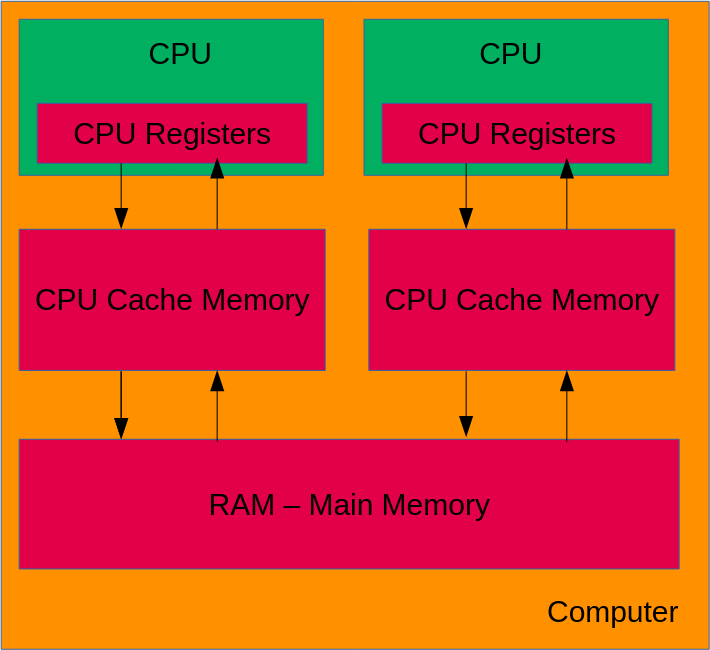
Computer Hardware Architecture
Java Memory Model
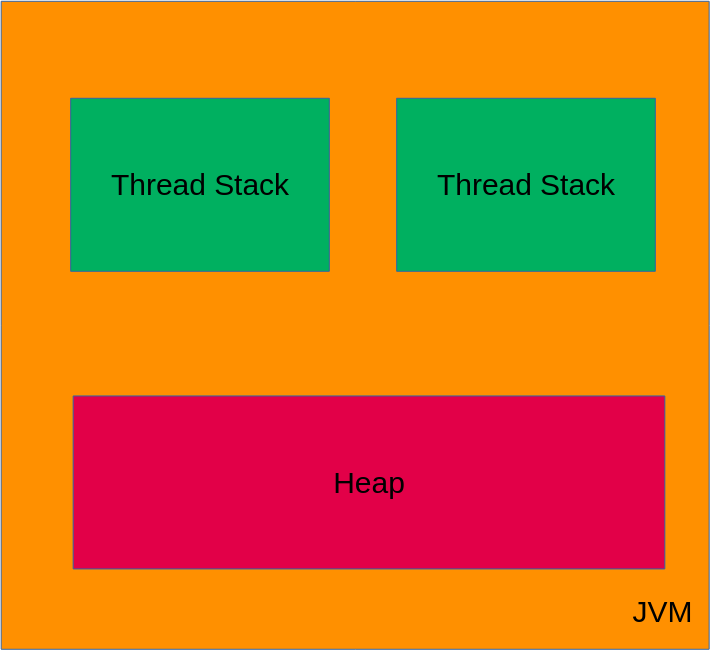
Java Memory Model
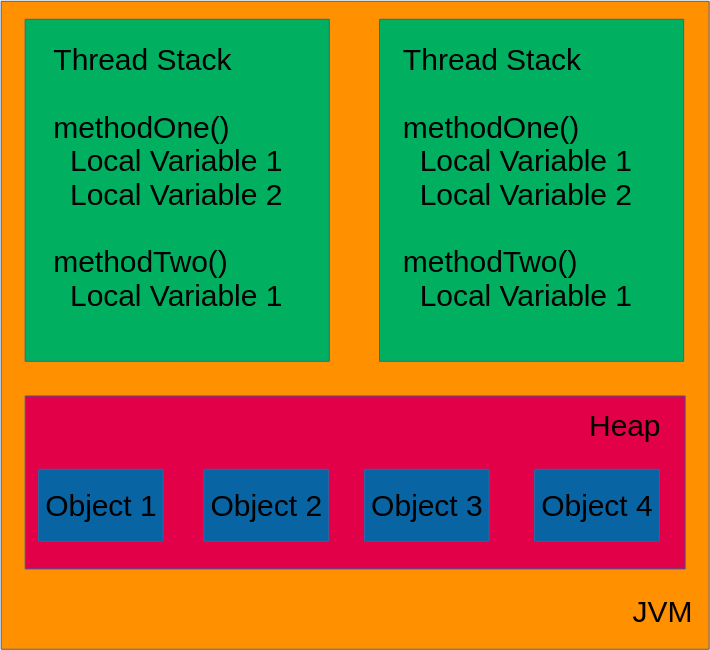
Java Memory Model
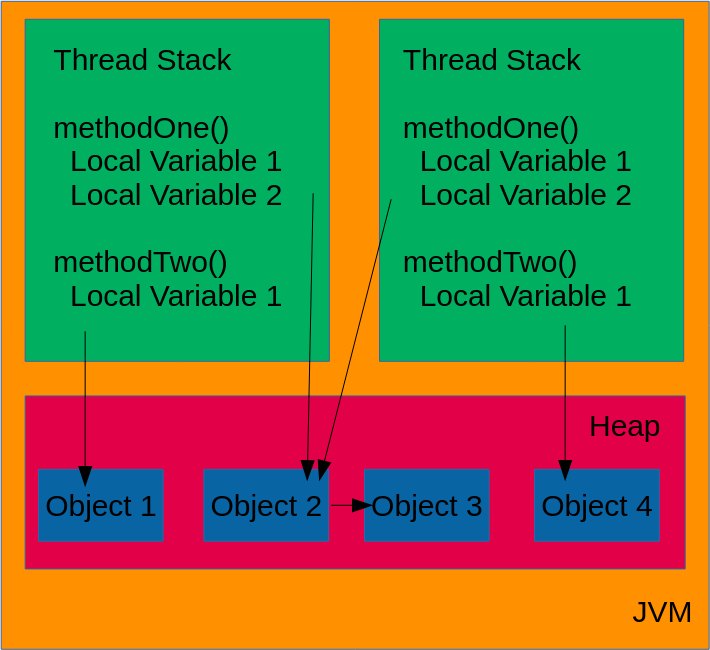
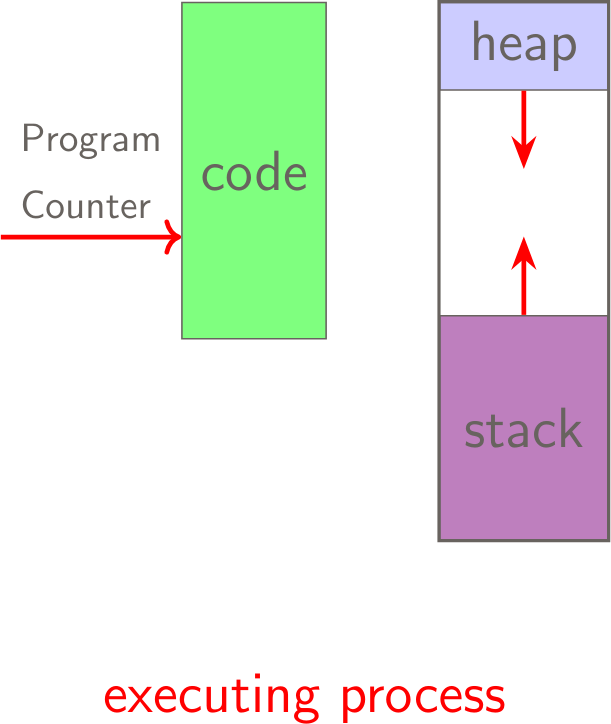
Sequential Process Characterization
- Program code (fixed)
- Control state (program counter)
- Memory state
- stack
- heap
- Formal properties
- safety (does nothing wrong)
- liveness (makes progress)
Physical Parallelism
Parallel execution of multiple independent processes takes place on separate physical hardware resources
- multiple cores
- specialized hardware interfaces
- parallel computers
- etc.
Logical Parallelism
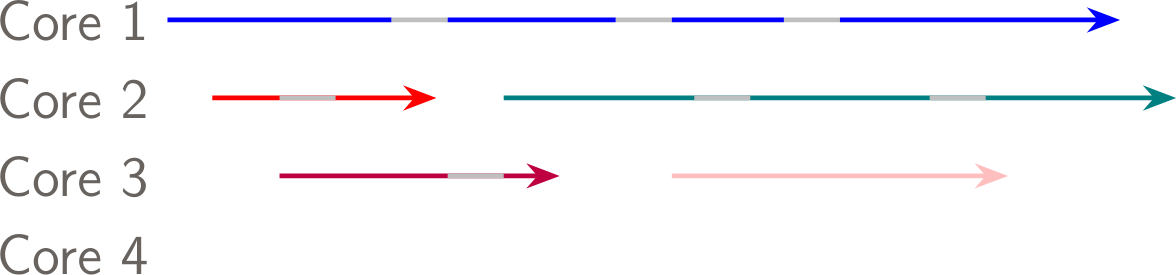
- Interleaved execution of multiple independent processes takes place on a shared physical hardware resource (single CPU)
- Logical and physical parallelism coexist on modern computers
- Same two programs
- may share a core at some point (interleaved execution)
- may execute on separate cores at other times (parallel execution)
Process Scheduling
- It is the responsibility of the operating system to schedule the execution of the processes sharing one computing platform
- The scheduling policy significantly impacts the execution times of the individual processes
- Any attempt to perform a performance analysis needs to take the scheduling policy into account
Sample Scheduling Policies
- Fixed window
- within a fixed-size window, each process has an assigned execution slot
- Round robin
- each process gets a turn with no process being allowed to run forever
- Priority based
- the process with the highest priority is scheduled first and runs to completion
- the schedule may be preemptive or not
Preemptive vs Non-Preemptive
- Scenario: You are playing on your phone when your phone receives a phone call!
- How would you want your phone to behave?
- Would you want it to wait for you to finish playing your game?
- Or would you like it to interrupt your game and give CPU time to handling the phone call?
- How would you want your phone to behave?
- Probably the latter! This is the difference between preemptive and non-preemptive!
Preemptive vs Non-Preemptive
- Preemptive: When a higher priority process comes along it is immediately given priority
- Non-Preemptive: Currently running process is allowed to finish before higher priority process is given time
Concurrency
- Concurrency is an abstract unifying framework that enables one to reason about logical and physical parallelism
- It abstracts out
- physical resources
- timing considerations
- It achieves this by reducing all forms of parallelism to nondeterministic execution of concurrent processes
- It allows one to reason about the execution of concurrent processes while ignoring many of the complexities of the execution environment
Concurrency vs Parallelism
- Concurrency
- When two or more tasks can start, run and complete in overlapping time periods
- Does not necessarily mean they will ever be running at the exact same time
- Parallelism
- When tasks run at the exact same time
Concurrency vs Parallelism: Example
- Imagine two lines of people both waiting for a single cashier, the cashier calls people from either line depending on the situation.
- This is concurrency because people in both lines are waiting there turn but the cashier is only seeing 1 person at a time.
- Now imagine you had two lines and two cashiers, 1 for each line
- This is parallelism because both people are being seen by the cashiers at the exact same time
Why Abstraction is Important
- Concurrent execution of multiple processes is an essential feature of modern computing
- Programming language development did not pay sufficient attention to concurrency, making programming more complex than it ought to be
- Some languages (including Java) include explicit constructs that address concurrent programming
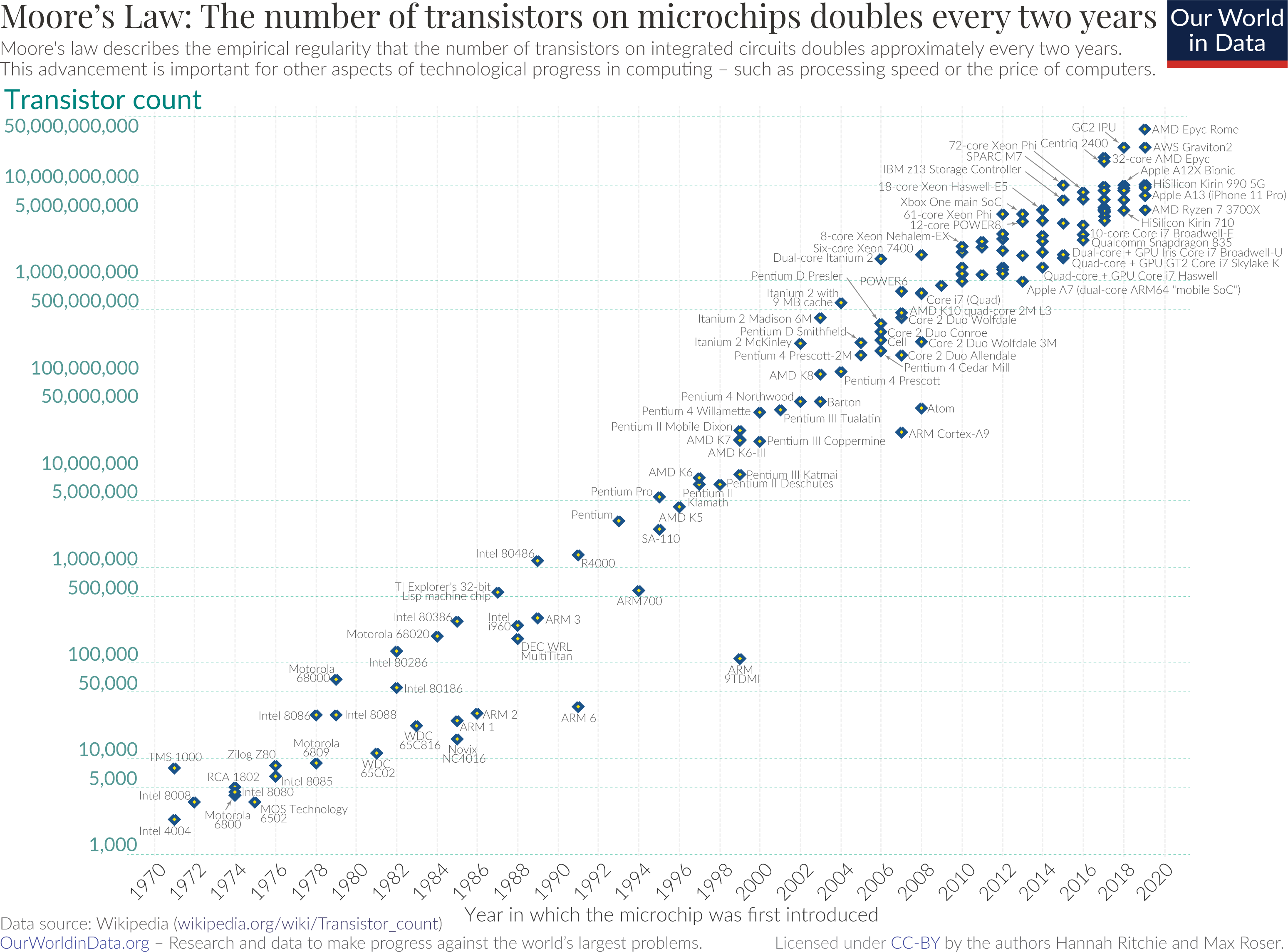
Moore’s Law
Why Abstraction is Important
- Concurrency introduces significant levels of complexity
- programs are rarely independent of each other
- programs need to coordinate with each other and compete for resources
- programs may need to coordinate even when
- developed independently
- residing on processors across the world
Fundamental Concepts: Atomicity
- Atomicity
- An operation is atomic if it appears to be instantaneous and uninterruptible
- Programming languages provide only minimal atomicity guarantees
- read a primitive variable
- write a primitive variable
- long and double read/writes are not guaranteed to be atomic
- This greatly complicates the programming task
Anomalies: Atomicity
- Let
x = 3andy = 5 - Consider the statement
x := x + y - What is the final value of
x?
Fundamental Concepts: Fairness
- Fairness
- Nondeterminism abstracts out the details of the scheduling policy
- Minimal guarantees are still needed in order to reason about process execution
- weak fairness is a useful abstract concept, every program is eventually scheduled to execute
- the operating system scheduling policy needs to be assessed when making such an assumption
Anomalies: Fairness
- Assume a priority-based non-preemptive schedule
- Process P has the high priority 1
- Process Q has the low priority 2
- P is idle
- Q is busy (running)
- When will P run again?
Practical Concerns
- In the absence of atomicity programming itself becomes impossible!
- Account balance $245
- Teller 1: deposit $100
- read account balance
- add $100
- update balance
- Teller 2: deposit $300
- read account balance
- add $300
- update balance
- Account balance
Practical Concerns
- In the absence of atomicity programming itself becomes impossible!
- Account balance $245
- Teller 1: deposit $100
- read account balance ($245) (1)
- add $100
- update balance
- Teller 2: deposit $300
- read account balance
- add $300
- update balance
- Account balance
Practical Concerns
- In the absence of atomicity programming itself becomes impossible!
- Account balance $245
- Teller 1: deposit $100
- read account balance ($245) (1)
- add $100 ($345) (2)
- update balance
- Teller 2: deposit $300
- read account balance
- add $300
- update balance
- Account balance
Practical Concerns
- In the absence of atomicity programming itself becomes impossible!
- Account balance $245
- Teller 1: deposit $100
- read account balance ($245) (1)
- add $100 ($345) (2)
- update balance
- Teller 2: deposit $300
- read account balance ($245) (3)
- add $300
- update balance
- Account balance
Practical Concerns
- In the absence of atomicity programming itself becomes impossible!
- Account balance $245
- Teller 1: deposit $100
- read account balance ($245) (1)
- add $100 ($345) (2)
- update balance
- Teller 2: deposit $300
- read account balance ($245) (3)
- add $300 ($545) (4)
- update balance
- Account balance
Practical Concerns
- In the absence of atomicity programming itself becomes impossible!
- Account balance $245
- Teller 1: deposit $100
- read account balance ($245) (1)
- add $100 ($345) (2)
- update balance
- Teller 2: deposit $300
- read account balance ($245) (3)
- add $300 ($545) (4)
- update balance ($545) (5)
- Account balance
Practical Concerns
- In the absence of atomicity programming itself becomes impossible!
- Account balance $245
- Teller 1: deposit $100
- read account balance ($245) (1)
- add $100 ($345) (2)
- update balance ($345) (6)
- Teller 2: deposit $300
- read account balance ($245) (3)
- add $300 ($545) (4)
- update balance ($545) (5)
- Account balance
Practical Concerns
- In the absence of atomicity programming itself becomes impossible!
- Account balance $245
- Teller 1: deposit $100
- read account balance ($245) (1)
- add $100 ($345) (2)
- update balance ($345) (6)
- Teller 2: deposit $300
- read account balance ($245) (3)
- add $300 ($545) (4)
- update balance ($545) (5)
- Account balance $345 (7) WRONG
A Programming Language Solution
- Critical Region
- a block of code that is executed atomically
- a way to ensure mutual exclusion
- Mutual Exclusion(mutex): Prevents simultaneous access to a shared resource
A Programming Language Solution
- This time, each deposit is a critical region.
- Account balance $245
- Teller 1: deposit $100
- read account balance
- add $100
- update balance
- Teller 2: deposit $300
- read account balance
- add $300
- update balance
- Account balance
A Programming Language Solution
- This time, each deposit is a critical region.
- Account balance $245
- Teller 1: deposit $100
- read account balance ($245) (1)
- add $100 ($345) (1)
- update balance ($345) (1)
- Teller 2: deposit $300
- read account balance
- add $300
- update balance
- Account balance
A Programming Language Solution
- This time, each deposit is a critical region.
- Account balance $245
- Teller 1: deposit $100
- read account balance ($245) (1)
- add $100 ($345) (1)
- update balance ($345) (1)
- Teller 2: deposit $300
- read account balance ($345) (2)
- add $300 ($645) (2)
- update balance ($645) (2)
- Account balance
A Programming Language Solution
- This time, each deposit is a critical region.
- Account balance $245
- Teller 1: deposit $100
- read account balance ($245) (1)
- add $100 ($345) (1)
- update balance ($345) (1)
- Teller 2: deposit $300
- read account balance ($345) (2)
- add $300 ($645) (2)
- update balance ($645) (2)
- Account balance $645 (3) CORRECT
Basics of Mutual Exclusion
- Test and set
- Locks
- Semaphores
- Mutual exclusion constructs (programming language specific)
Test and Set
- Simple boolean flags cannot ensure mutual exclusion
- let G guard some resource that demands mutually exclusive access
- let G = true indicating that the resource is available
- processes P and Q need the resource
- P reads G to be true
- Q reads G to be true
- P sets G to false
- P starts using the resource
- Q sets G to false
- Q starts using the resource
Test and Set
- Hardware support is needed
- A process must test and set the flag in a single atomic step
- The busy-wait is a real problem!
while (true) do
    if G then G := false // This needs to be atomic!
        use resource
        G := true
        break
    fi
od
Locks
- Test and set enables the introduction of locks
- Associate a lock with each resource
- Bracket the use of the resource with the operations
- lock(G)
- returns only when the lock is set
- the process is suspended avoiding busy-wait
- unlock(G)
- lock(G)
Locks
A process may secure multiple resources as needed
lock(file1)
lock(file2)
    transfer data from file1 to file2
unlock(file2)
unlock(file1)
Possible anomalies:
- accessing the resource without locking
- failing to issue the unlock
- deadlock
Deadlock Avoidance
- Deadlock occurs when two processes are waiting on each other to release some resource
- One way of avoiding deadlock is for all the processes to lock resources in the same order
Semaphores
- A semaphore is a construct designed to allow at most k processes get access to a given resource
- When k is 1, the semaphore becomes a basic lock (a binary semaphore)
- Traditionally the two operations over a semaphore are
- P(s) – tests for zero and decrements s by one, if greater than zero
- V(s) – increments s by one indicating the release of the resource
- All processes must follow the same protocol
- P(s) — guards entry to/use of the resource
- V(s) — frees the resource