Office: FEC 2390
Phone: +1 (505) 277 9609
Email: trilce at unm.edu
Address: Farris Engineering Center, 1901 Redondo S Drive, Albuquerque, NM, 87106
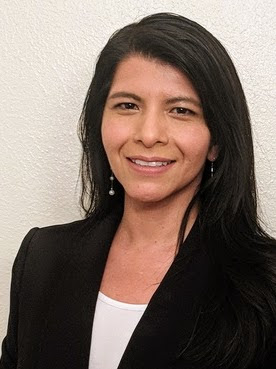
I am an associate professor in the department of Computer Science at the University of New Mexico and director of the Data Science Laboratory . My research interests span the intersection of Machine Learning, High Performance Computing, Big Data, and their applications to interdisciplinary problems.
The goal of my research program is to solve computationally intensive and data intensive problems in science, health, and education, especially in scenarios where resources and trained professionals are scarce. I believe that a computer is only as good as the difference it can make in the world, and I strive to achieve this level of impact with my work.
I obtained a PhD in computer science from University of Delaware where I worked with Dr. Michela Taufer on integrating application-aware self-management to global distributed computing environments with the final goal of making them accessible to a wider scientific community. I also got a M.S in computer science from INAOE, Puebla and a B.S in informatics from the Universidad de Guadalajara, Jalisco.
I'm originally from Guadalajara, a beautiful city in the western-pacific side of Mexico. My name, Trilce, (pronounced in english like tree-il-sˈe)) is a neologism invented by peruvian poet Cesar Vallejo.
CS 429/529 Machine Learning
As intelligent systems become pervasive and data production grows at a rate never seen before, the ability to understand, analyze, and automatically learn from data is becoming a crucial technical skill. In this course we cover principles and practice of Machine Learning, that is, systems that mprove performance on specific tasks through experience. The course balances theory and practice to provide students with the fundamentals of statistical learning as well as with hands-on experience building predictive systems.
CS 457/567 Introduction to Big Data
In this course we study key data analysis and management techniques, which applied to massive datasets are the cornerstone that enables real-time decision making in distributed environments, business intelligence in the Web, and scientific discovery at large scale. In particular, we examine the map-reduce parallel computing paradigm and associated technologies such as distributed file systems, no-SQL databases, and stream computing engines. Additionally we review machine learning methods that make possible the efficient analysis of large volumes of data in near real time.
CS 533 Experimental Methods in CS
In this course explores the design, experimentation, testing, and pitfalls of empirical research in Computer Science. In particular, students will learn how to use a data-driven approach to understanding computing phenomena, formulate hypotheses, design computing experiments to test and validate or refute said hypotheses, evaluate and interpret empirical results. Overall, the goal of this course is to provide the students with the foundations of rigorous empirical research